Home Electrical Safety Tips Every Family Should Follow
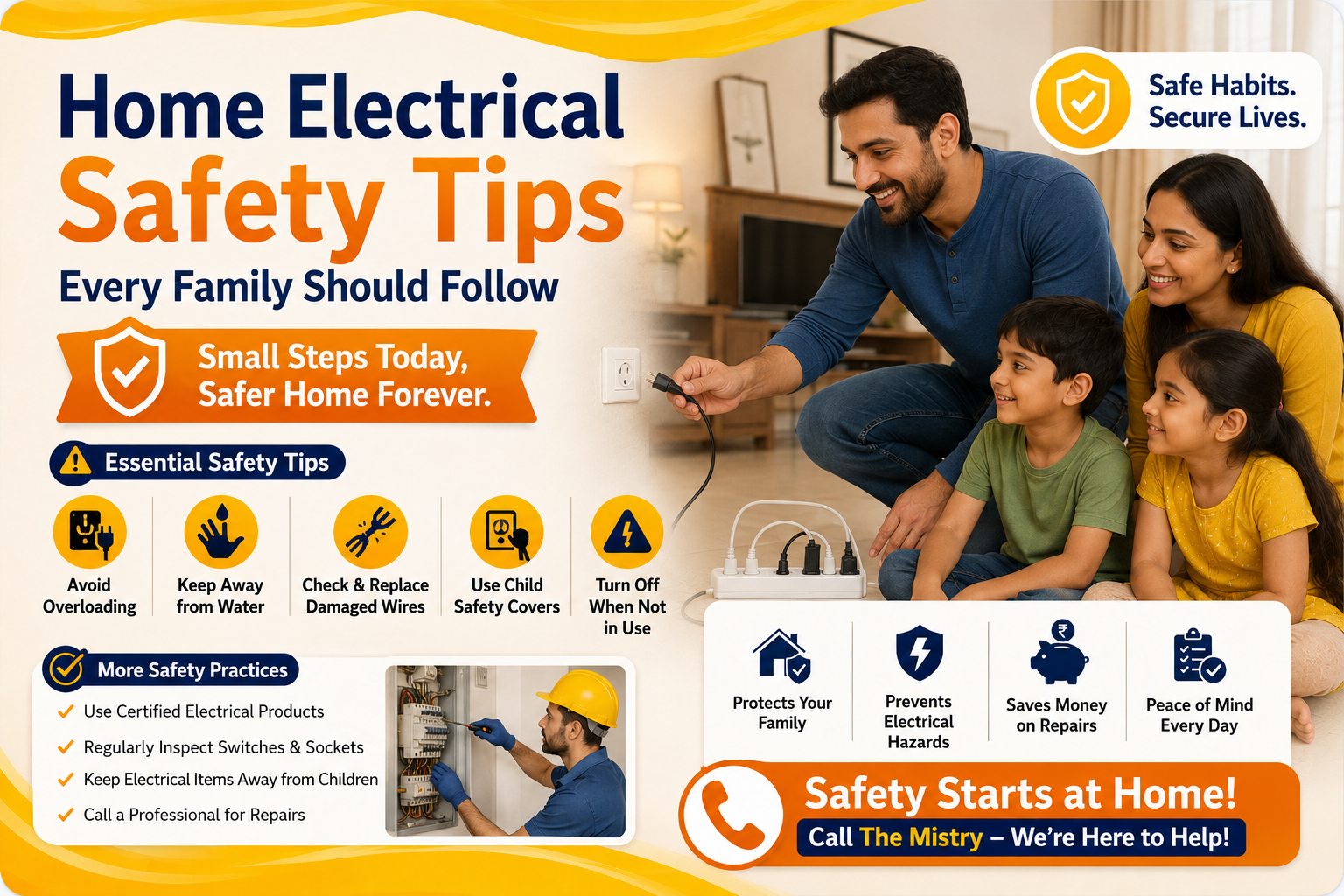
Learn essential home electrical safety tips to prevent shocks, fires, and appliance damage. Keep your family safe with expert guidance from The Mistry.
Electricity is a basic necessity in every home. From lighting and fans to refrigerators, televisions, and charging devices, almost everything depends on a safe and stable electrical system. While electricity makes life comfortable, it can also be dangerous if not handled properly.
Many electrical accidents happen at home due to simple mistakes or lack of awareness. Faulty wiring, overloaded circuits, and damaged appliances can lead to electric shocks or even fires. The good news is that most of these risks can be avoided by following basic electrical safety practices.
In this blog, we will cover simple and practical home electrical safety tips that every family should follow to keep their home safe and secure. Professional services like The Mistry can also help ensure your electrical system is properly maintained by skilled technicians.
Why Electrical Safety Is Important
Electrical safety is not just about avoiding inconvenience—it is about protecting lives and property. A small mistake, like using a damaged wire or overloading a socket, can cause serious accidents.
Risks of poor electrical safety:
- Electric shocks and injuries
- Fire hazards due to short circuits
- Damage to appliances
- Power failures and interruptions
By following basic safety tips, you can reduce these risks and create a safe environment for your family.
1. Avoid Overloading Power Sockets
One of the most common electrical mistakes in homes is overloading sockets. Plugging multiple devices into a single outlet increases the load on the circuit.
Why it is dangerous:
- Overheating of wires
- Risk of short circuits
- Increased chances of fire
What you should do:
- Use separate sockets for heavy appliances
- Avoid using too many extension cords
- Distribute electrical load evenly
2. Replace Damaged Wires and Cables
Frayed or damaged wires are a serious safety hazard. Exposed wires can cause electric shocks or sparks.
Signs of damaged wiring:
- Cracked or broken insulation
- Burn marks on wires
- Frequent power interruptions
Safety tip:
Replace damaged wires immediately and avoid using temporary fixes like tape for long-term use.
3. Keep Electrical Appliances Away from Water
Water is a conductor of electricity, and contact between water and electrical devices can be extremely dangerous.
Common risky situations:
- Using appliances with wet hands
- Keeping electrical devices near sinks
- Water leakage near switchboards
Safety tip:
Always keep electrical appliances dry and ensure switchboards are installed away from water sources.
4. Switch Off Appliances When Not in Use
Leaving appliances on unnecessarily not only wastes electricity but also increases the risk of overheating.
Benefits of switching off appliances:
- Reduces electricity bills
- Prevents overheating
- Extends appliance life
Safety tip:
Make it a habit to switch off appliances and unplug devices when not in use.
5. Use High-Quality Electrical Products
Using cheap or low-quality electrical products can be risky. Poor-quality switches, wires, and appliances may fail easily and cause accidents.
Safety tip:
Always choose certified and good-quality electrical materials for your home.
6. Install Proper Earthing
Earthing is an important safety feature that protects against electric shocks by directing excess electricity into the ground.
Why it is important:
- Prevents electric shocks
- Protects appliances from damage
- Improves overall electrical safety
Safety tip:
Ensure your home has a proper earthing system installed by a professional.
7. Keep Switchboards Child-Safe
Homes with children need extra safety measures. Curious children may try to touch switches or insert objects into sockets.
Safety tip:
- Use socket covers
- Keep switchboards out of children’s reach
- Educate children about electrical safety
8. Avoid DIY Electrical Repairs
Many homeowners try to fix electrical issues themselves to save money. However, this can be dangerous if you do not have proper knowledge.
Risks of DIY repairs:
- Electric shocks
- Incorrect wiring
- Increased fire risk
Safety tip:
Always call a professional electrician for repairs.
9. Regularly Inspect Your Electrical System
Electrical systems can wear out over time. Regular inspections help identify problems before they become serious.
What to check:
- Wiring condition
- Switchboards and outlets
- Circuit breakers
- Appliances
Safety tip:
Schedule periodic inspections to ensure everything is working safely.
10. Install Circuit Breakers and Safety Devices
Circuit breakers are designed to cut off power during overload or short circuits. They are essential for home safety.
Benefits:
- Prevent electrical fires
- Protect appliances
- Ensure safe power distribution
Safety tip:
Ensure your home has modern circuit breakers installed.
11. Watch for Warning Signs
Electrical systems often show warning signs before a major problem occurs.
Common warning signs:
- Flickering lights
- Burning smell near switches
- Buzzing sounds
- Warm outlets
Safety tip:
Do not ignore these signs. Call a professional immediately.
12. Handle Appliances Carefully
Improper handling of appliances can lead to accidents.
Safety practices:
- Do not pull cords forcefully
- Avoid using damaged plugs
- Follow manufacturer instructions
How The Mistry Helps Ensure Electrical Safety
Managing electrical safety on your own can be challenging. The Mistry makes it easier by connecting homeowners with skilled electricians who can handle inspections, repairs, and installations.
Benefits of The Mistry:
- Experienced and verified electricians
- Quick and convenient service
- Safe and reliable repairs
- Transparent pricing
Whether you need a wiring check, switch repair, or full inspection, professional technicians ensure your home remains safe.
Conclusion
Electrical safety is essential for every home. Simple habits like avoiding overloaded sockets, replacing damaged wires, keeping appliances dry, and scheduling regular inspections can prevent serious accidents.
Ignoring small electrical issues can lead to major problems such as shocks, fires, and appliance damage. That is why it is important to stay alert and take action when needed.
With trusted services like The Mistry, homeowners can easily access professional electricians who ensure safe and reliable electrical systems. By following these safety tips and seeking expert help when required, you can protect your home and keep your family safe from electrical hazards.
FAQs
1. Why is electrical safety important at home?
Electrical safety helps prevent electric shocks, fire hazards, and damage to appliances.
Following basic safety practices protects both your family and property.
2. What are the most common electrical hazards in homes?
Overloaded sockets, damaged wiring, faulty appliances, and exposed electrical connections are common hazards.
These issues can increase the risk of short circuits and electrical fires.
3. How often should I get my home's electrical system inspected?
It is recommended to have a professional electrical inspection every few years or whenever you notice warning signs.
Regular inspections help identify potential problems before they become serious.
4. Can overloaded power sockets cause electrical fires?
Yes, plugging too many devices into a single socket can overheat wires and circuits.
This increases the risk of short circuits and electrical fires.
5. How can The Mistry help improve electrical safety?
The Mistry connects homeowners with skilled electricians for inspections, repairs, and electrical maintenance.
Their professional services help ensure your home's electrical system remains safe and reliable.